

Faculty of Medicine, Department of Medical Education, Ege University, Turkey
ORCID: 0000-0002-8781-6816
Correspondence: Ayse Hilal Bati
Received: 13 July, 2026; Accepted: 24 August, 2026; Published: 01 September, 2026
Citation: Bati, A.H. (2026). A new era in medical education and healthcare services: Metaverse, artificial intelligence, and simulation-based education. Sci Academique, 7(2), pp. 77 - 90
Abstract
Medical education is experiencing a profound transformation, shifting from traditional, rote-learning models to interactive, data-driven approaches powered by Artificial Intelligence (AI) and Information Technology. This evolution, significantly accelerated by the COVID-19 pandemic, is reshaping how future healthcare professionals are trained.
A cornerstone of this new era is simulation-based medical education integrated with Large Language Models. These tools create dynamic, cost-effective virtual patients that allow students to safely practice clinical diagnoses and essential “human” skills such as empathy and crisis management. Furthermore, AI enables the objective evaluation of student performance. By analyzing massive datasets from virtual reality (VR) simulators, machine learning algorithms can assess surgical psychomotor skills, while natural language processing standardizes the evaluation of clinical communication.
The Metaverse represents another major breakthrough, blending augmented reality, VR, and AI to offer immersive learning. It facilitates dynamic 3D anatomy explorations and allows interdisciplinary teams to collaborate seamlessly in virtual emergency rooms, overcoming geographical boundaries. It also introduces integrative medicine practices, such as VR-supported therapies for conditions like PTSD.
However, this technological shift introduces significant ethical and infrastructural challenges. Key concerns include algorithmic biases that could perpetuate inequalities, dangerous AI “hallucinations” that fabricate medical data, data privacy issues, and the “black box” problem regarding accountability for medical errors. Additionally, there is a risk that over-reliance on technology might erode the foundational compassion and empathy in the doctor-patient relationship.
Ultimately, AI and the Metaverse should function as “augmented intelligence” rather than replacements for human physicians. By reducing the burden of technical evaluations, AI allows educators to focus on fostering emotional connections and teaching medical ethics. To secure this future, integrating AI and data science literacy into medical curricula is absolutely essential.
Keywords: Medical Education; Artificial Intelligence; Metaverse; Simulation Based Education; Competency-Based Education; Augmented Intelligence
Introduction and Development Process
Medical education is in a state of continuous transformation in line with scientific discoveries, changing societal needs, and technological advancements [1]. The master-apprentice-based and rote-learning-driven education model, which became standardized in the early 20th century, is currently being replaced by an Artificial Intelligence (AI) and Information Technology (IT)-focused, adaptable, and interactive approach due to the rapidly and massively increasing data load and digitalization. In particular, the COVID-19 pandemic accelerated the integration of digital tools and virtual simulations to prevent disruptions in medical education, necessitating a transition to innovative pedagogical models that transcend traditional boundaries [2,3].
Currently, research in the literature appears insufficient in three key areas regarding the integration of artificial intelligence and simulation into medical education [4]. First, existing studies are highly fragmented and isolated, focusing on center-specific, specialty-specific applications rather than offering a holistic and continuous framework [5]. Second, much of the research falls into the “justification trap,” demonstrating that “AI works” only through short-term, small-sample satisfaction surveys, but failing to provide theoretical evidence on how these technologies affect long-term behavioral changes and clinical patient outcomes [4]. Finally, while technical competencies are frequently discussed, there is a profound gap in understanding the emotional domain [6].
This technological transformation directly supports the transition from traditional, time-based medical training models to the framework of Competency-Based Medical Education (CBME). CBME demands that students acquire measurable and observable competencies (such as Entrustable Professional Activities – EPAs) rather than merely logging clinical hours. AI-driven simulation environments operationalize CBME by enabling personalized, mastery-based learning, allowing students to practice in safe environments at their own pace until clinical mastery is achieved.
The main objective of this study is to critically evaluate technological developments such as Metaverse, Artificial Intelligence, and Simulation-Based Medical Education (SBME). The aim is to create an objective, safe, and collaborative experiential learning environment and to demonstrate that these tools should not replace human educators, but rather that an ethical framework for “enhanced intelligence” should be established that preserves and enhances the human-centered essence of medicine, such as empathy, compassion, and critical human judgement.
Virtual Patients, Simulation, and Artificial Intelligence Integration
Simulation-based medical education (SBME) enables students to develop their technical and non-technical skills in a safe, risk-free, and controlled environment without compromising patient safety [7,8]. These systems, which were highly costly and more static in the past, have acquired a highly dynamic structure when equipped with AI algorithms and Large Language Models (LLM) [9,10]. For example, by using generative AI tools like ChatGPT, virtual patient scenarios that offer realistic, cultural, and demographic diversity and are tailored to specific learning objectives that can be produced much faster and at a lower cost compared to human educators [11].
These smart virtual patients offer students the opportunity to experience not only the processes of taking medical history and diagnosing, but also complex “human” skills such as empathy, psychiatric crisis management, and communication [4,9,12]. These systems, which can provide instant and realistic reactions based on their own autonomy to the questions asked by the students, transform clinical reasoning skills from rote memorization into learning through experience.
Here, the integration of generative AI automates scenario generation and simulates realistic human responses. This allows students to practice non-technical human skills such as empathy and crisis management in a standardized, low-risk manner. In other words, it provides an environment that prepares students for the nuanced human dimensions of care before they step into a real clinical setting.
AI-powered virtual patient simulations physically manifest Kolb’s Experiential Learning Theory in a digital format. The learner engages in a “Concrete Experience” by interacting with the virtual patient; conducts “Reflective Observation” through the instant, data-driven debriefings provided by the AI; achieves “Abstract Conceptualization” by synthesizing clinical insights from errors; and finally, undertakes “Active Experimentation” by testing these refined clinical strategies in subsequent scenarios. This systematic cycle ensures deep, sustainable clinical reasoning.
The clinical and pedagogical effectiveness of these simulations is demonstrated by a comprehensive systematic review by Wu et al. analyzing the application of virtual simulations in medical school undergraduate education, showing that structured virtual scenarios significantly improve students’ clinical reasoning abilities, diagnostic accuracy, and cognitive information retention skills [3]. The shift toward assessing interactive communication through AI-assisted characters is supported by primary mixed-methods evidence. Liaw et al. conducted an empirical mixed-methods study investigating AI-assisted virtual reality (VR) simulations for interprofessional communication [7]. Their quantitative results showed statistically significant improvements in students’ post-intervention communication confidence and readiness for cooperation, while qualitative data revealed that AI patients’ speech autonomy minimized social anxiety and encouraged self-directed, repetitive practice.
However, the magic of these environments should in no way replace training in real-world settings. Their use is not to replace real-world training, but to provide an opportunity to gain experience without harm through a humane approach. Otherwise, it would be nothing more than gaining a mechanical understanding through technological support.
Automation and Performance Analysis in Objective Evaluation
AI is also bringing radical changes in the evaluation of student performance. In surgical training, massive data such as tool movements, speed, tissue force, and acceleration obtained from virtual reality (VR) simulators are analyzed with machine learning algorithms to objectively evaluate the psychomotor skills of students [4,9,13]. In this context, the Virtual Operative Assistant (VOA) or continuous expertise monitoring systems (ICEMS) develop and classify students according to their expertise levels, providing automatic, measurement-based feedback aimed at reducing errors [4,14]. Similarly, in Objective Structured Clinical Examinations (OSCE), by using natural language processing (NLP) algorithms, students’ communication with patients, the clarity of the medical language they use, and their empathetic approaches can be measured in a standardized way through text transcripts or voice analyses, thereby minimizing biases caused by human evaluators [10].
Automated evaluation systems resolve the methodological hurdles in assessing the higher echelons of Miller’s Pyramid of Clinical Competence. While traditional written exams test the baseline “Knows” and “Knows How” stages, AI analytics in surgical VR and natural language processing in OSCEs objectively evaluate the top-tier “Shows How” and “Does” domains in simulated clinical environments. AI thus bridges the evaluation gap between cognitive knowledge and actual clinical performance.
The shift to automated assessment is based on rigorous, randomized comparative studies. In a clinical randomized study published in JAMA Network Open, Fazlollahi et al. compared the effectiveness of an AI virtual reality trainer in medical students learning virtual brain tumor resections to traditional expert human training14. Randomized data revealed that students trained by the AI trainer achieved significantly higher surgical proficiency, executed safer instrument trajectories, and applied lower tissue force compared to those in the control group. To further establish objective grading standards, Winkler-Schwartz et al. In 2019, a structured cohort study was conducted by Mishra et al. that applied machine learning algorithms to raw mechanical simulator data (velocity, acceleration, and force). Their models classified surgical specialization with high accuracy, proving that AI can decipher objective psychomotor patterns that human observers cannot perceive [13]. At the systematic assessment level, a systematic review of AI innovations in Objective Structured Clinical Examinations (OSCE) by Mishra et al. confirmed that natural language processing (NLP) and speech-to-text algorithms provide highly standardized, unbiased assessments of student communication and effectively eliminate inter-rater variability [10].
AI-powered assessment tools are taking over the repetitive and labor-intensive technical assessment workload of human trainers. As a result, this situation frees up critical time for human educators to focus on tasks that technology cannot, and provides them with the opportunity to directly offer emotional support, ethical guidance, and clinical knowledge to their students. This constitutes the most important training an educator should truly provide to their students.
Metaverse, Integrative Medicine, and Interdisciplinary Education
Another exciting turning point in medical education is Metaverse platforms that blend augmented reality (AR), virtual reality (VR), and AI [15]. The Metaverse allows basic sciences such as anatomy to be examined not only from books but also through dynamic 3D structures [4,15]. Beyond this, by eliminating geographical barriers, it allows students from different health disciplines (physician, nurse, pharmacist, physiotherapist, etc.) to collaborate simultaneously in a virtual emergency room, developing teamwork and complex crisis management skills. Furthermore, the metaverse ecosystem brings integrative medicine practices together with clinical education by offering guided meditation, virtual yoga, and virtual reality-supported therapies for the treatment of post-traumatic stress disorder (PTSD) [15].
The multiplayer mizanpaj of Metaverse platforms aligns with Lave and Wenger’s theories of Situated Learning and Communities of Practice. Collaborating across medical, nursing, and pharmaceutical disciplines within virtual intensive care units targets Interprofessional Education (IPE) competencies. Learners construct knowledge “situatedly” through social interaction within a virtual community during simulated clinical crises, cultivating a robust teamwork culture that seamlessly translates into real-world practice.
Rather than being an isolating digital space, Metaverse acts as a collaborative bridge. By enabling multidisciplinary teamwork in virtual emergency rooms and integrating holistic methods such as guided meditation, it creates an advanced “augmented” environment. Here, technological interaction can be used to enhance collective human empathy and comprehensive, integrative patient care. While its impact on psychomotor skills is limited, it is undeniable that it provides significant cognitive benefits for interdisciplinary or interprofessional team work.
Ethical Issues, Limitations, and Preserving the Human Element
The integration of AI and the Metaverse into medical education also brings serious ethical, legal, and infrastructural obstacles. The reflection of algorithmic biases in the data on which AI is trained onto evaluation processes carries the risk of leading to inequalities, especially for certain demographic or minority groups [3,6,10]. Generative AI producing incorrect or fabricated medical information with fake references, referred to as “hallucination”, is a huge threat in terms of patient safety and scientific accuracy [1,9,16]. Weaknesses regarding data privacy and the inability to understand how the systems’ learning algorithms make decisions (the “black box” problem) ignite debates over who will be responsible for future medical errors [9,12]. Additionally, there is concern that over-reliance on these technologies will create “automation bias” and mechanize the doctor-patient relationship, blunting the compassion, empathy, and critical human judgment that form the foundation of the medical profession [1,3].
These limitations are the most critical obstacle to achieving an ethical “augmented intelligence” partnership. If algorithmic biases, generative AI hallucinations, and data privacy breaches are left unchecked, technology risks eroding trust and compassion—fundamental elements of medicine. Therefore, establishing strict ethical boundaries and preventing automation bias are not merely technical requirements, but absolute prerequisites for preserving the irreplaceable human judgment at the heart of healthcare.
This ethical and methodological caution is reflected in the outcomes of recent systematic reviews. As mapped by Wu et al., the vast majority of current literature is limited by small sample sizes, single-center designs, and a lack of longitudinal follow-up, which often falls into the “justification trap” of merely proving that a technology is usable rather than demonstrating its long-term impact on patient outcomes [3]. To address these limitations, researchers are moving toward high-quality comparative methodologies. This is highlighted by newly designed randomized controlled trial protocols, such as the one proposed by Zidoun and Mardi, which aims to rigorously compare AI-based simulator interactions against traditional standardized human patients. Such high-level clinical trials are essential to establish the true non-inferiority or superiority of AI-mediated instruction [12].
Figure 1 shows A Conceptual Model for ‘Augmented Intelligence’ in Medical Education.
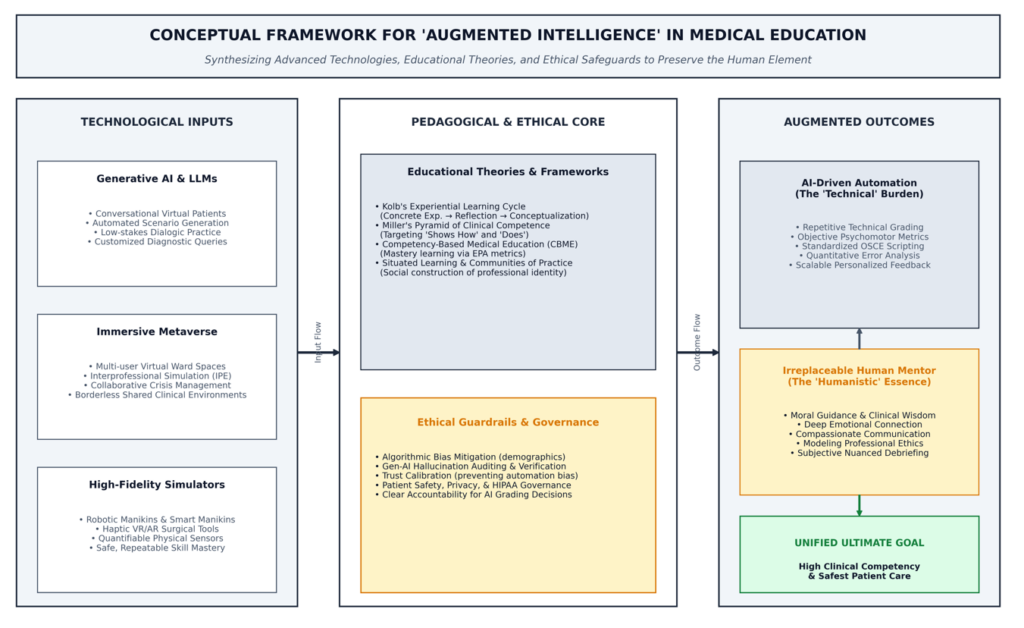
Figure 1: A Conceptual Model for ‘Augmented Intelligence’ in Medical Education
Future Vision and Conclusion
AI, the Metaverse, and advanced simulation technologies are moving medical education from traditional knowledge transfer to a personalized, data-driven, and experiential format [1]. For this transformation to be successful and sustainable, it is essential that AI tools are positioned not as replacements for human physicians and educators, but rather as “augmented intelligence” partners that strengthen their diagnostic and educational capabilities [10,12,17]. With AI lightening the clinical and technical evaluation load, medical educators will have much more valuable time left to establish direct emotional bonds with their students, provide moral guidance, and instill medical ethics. In order for future healthcare professionals to exist safely, ethically, and efficiently in this new data-driven environment, AI and data science literacy must be integrated into medical curricula without delay [1,2,9].
To realize this future vision, concrete and actionable strategies must be implemented at both the educator and institutional levels (Table 1):
Table 1: Practical Recommendadtion and Strategic Action for future vision
| Level | Practical Recommendadtion & Strategic Action |
| Medical Educators | Transition to Coaching Educators’ pedagogical role should shift from being a content presenter or a repetitive manual evaluator of clinical checklists to coaching and clinical mentoring. They should actively use the time provided by technology support to conduct in-depth assessments, focus on emotional connections, and guide students through complex ethical dilemmas. |
| Co-Design Scenarios Educators should actively collaborate with technology developers to co-design and validate virtual patient scenarios. This ensures that simulation scenarios remain clinically accurate, culturally inclusive, and strictly aligned with core curriculum learning objectives. | |
| Avoid Automation Bias Professional development should be provided for educators to understand how AI-powered simulators make decisions. This is crucial to help students adjust their reliance on technology, avoid over-reliance (“automation bias”), and learn when to prioritize critical human judgment. | |
| Academic Institutions | Systemic Curricular Integration Medical schools should integrate structured AI and data science literacy into their core medical education programs. This should be treated as a fundamental component of clinical reasoning and patient safety courses, not as an elective. |
| Multiprofessional Metaverse Institutions should invest in persistent, interprofessional virtual environments (such as virtual emergency rooms or intensive care units). This will allow medical, nursing, and pharmacy students to systematically train together, gaining Interdisciplinary Education (IPE) and collaborative team-based crisis management competencies. | |
| AI Governance Boards Institutional AI governance and ethics boards should be established. These boards should oversee AI simulation tools for algorithmic bias, create data privacy protocols, validate generative AI outputs against “illusions,” and define clear accountability frameworks for AI-assisted clinical rating. |
In conclusion, every aspect of this technological paradigm shift, from virtual scenario creation to automated grading and immersive Metaverse spaces, demonstrates that the future of medicine rests on a symbiotic relationship. A successful “augmented intelligence” partnership model empowers healthcare rather than mechanizes it. Integrating AI and data science literacy into medical curricula will ensure that future physicians use these tools ethically and maintain human compassion as a guiding force in their clinical practice.
References
- Shaban, S., & Magzoub, M. E. (2025). Artificial Intelligence in Medical Education and Assessment: The next step in the IT Revolution. F1000Research, 14, 1360. https://doi.org/10.12688/f1000research.173611.1
- Komasawa, N., & Yokohira, M. (2023). Simulation-based education in the artificial intelligence era. Cureus, 15(6). https://doi.org/10.7759/cureus.40940
- Wu, Q., Wang, Y., Lu, L., Chen, Y., Long, H., & Wang, J. (2022). Virtual simulation in undergraduate medical education: a scoping review of recent practice. Frontiers in medicine, 9, 855403. https://doi.org/10.3389/fmed.2022.855403
- Hasan, S., Ahmed, A., & Ismail, F. W. (2026). The evolving role of AI in simulation-based medical education: A narrative review. Advances in Medical Education and Practice, 581691. https://doi.org/10.2147/AMEP.S581691
- Liaw, S. Y., Tan, J. Z., Lim, S., Zhou, W., Yap, J., Ratan, R., et al. (2023). Artificial intelligence in virtual reality simulation for interprofessional communication training: mixed method study. Nurse education today, 122, 105718. https://doi.org/10.1016/j.nedt.2023.105718
- Tolsgaard, M. G., Pusic, M. V., Sebok-Syer, S. S., Gin, B., Svendsen, M. B., Syer, M. D., et al. (2023). The fundamentals of Artificial Intelligence in medical education research: AMEE Guide No. 156. Medical Teacher, 45(6), 565–573. https://doi.org/10.1080/0142159X.2023.2180340
- Elendu, C., Amaechi, D. C., Okatta, A. U., Amaechi, E. C., Elendu, T. C., Ezeh, C. P., & Elendu, I. D. (2024). The impact of simulation-based training in medical education: A review. Medicine, 103(27), e38813. https://doi.org/10.1097/MD.0000000000038813
- Pizzolla, I., Aro, R., Duez, P., De Lièvre, B., & Briganti, G. (2023). Integrating artificial intelligence into medical education: lessons learned from a Belgian initiative. Journal of Interactive Learning Research, 34(2), 401-424. https://doi.org/10.70725/265312mqoebd
- Hamilton, A. (2024). Artificial intelligence and healthcare simulation: the shifting landscape of medical education. Cureus, 16(5), e59747. https://doi.org/10.7759/cureus.59747
- Mishra, G. V., Luharia, A. A., Naqvi, W., & Sood, A. (2024). Artificial intelligence in OSCE: innovations and implications for medical education assessment–a systematic review. In 2024 2nd DMIHER International Conference on Artificial Intelligence in Healthcare, Education and Industry (IDICAIEI) (pp. 1-5). IEEE. https://doi.org/10.1109/IDICAIEI61867.2024.10842789
- Peralta Ramirez, A. A., Trujillo López, S., Navarro Armendariz, G. A., De la Torre Othón, S. A., Sierra Cervantes, M. R., & Medina Aguirre, J. A. (2025). Clinical simulation with ChatGpt: A revolution in medical education?. Journal of CME, 14(1), 2525615. https://doi.org/10.1080/28338073.2025.2525615
- Zidoun, Y., & Mardi, A. E. (2024). Artificial Intelligence (AI)-Based simulators versus simulated patients in undergraduate programs: A protocol for a randomized controlled trial. BMC Medical Education, 24(1), 1260. https://doi.org/10.1186/s12909-024-06236-x
- Winkler-Schwartz, A., Bissonnette, V., Mirchi, N., Ponnudurai, N., Yilmaz, R., Ledwos, N., … & Del Maestro, R. F. (2019). Artificial intelligence in medical education: best practices using machine learning to assess surgical expertise in virtual reality simulation. Journal of surgical education, 76(6), 1681-1690.
- Fazlollahi, A. M., Bakhaidar, M., Alsayegh, A., Yilmaz, R., Winkler-Schwartz, A., Mirchi, N., et al. (2022). Effect of artificial intelligence tutoring vs expert instruction on learning simulated surgical skills among medical students: a randomized clinical trial. JAMA network open, 5(2), e2149008. https://doi.org/10.1001/jamanetworkopen.2021.49008
- Ahuja, A. S., Polascik, B. W., Doddapaneni, D., Byrnes, E. S., & Sridhar, J. (2023). The digital metaverse: Applications in artificial intelligence, medical education, and integrative health. Integrative Medicine Research, 12(1), 100917. https://doi.org/10.1016/j.imr.2022.100917
- Rodgers, D. L., Needler, M., Robinson, A., Barnes, R., Brosche, T., Hernandez, J., … & Ahmed, R. (2023). Artificial intelligence and the simulationists. Simulation in Healthcare, 18(6), 395-399. https://doi.org/10.1097/SIH.0000000000000747
- Mir, M. M., Mir, G. M., Raina, N. T., Mir, S. M., Mir, S. M., Miskeen, E., et al. (2023). Application of artificial intelligence in medical education: current scenario and future perspectives. Journal of advances in medical education & professionalism, 11(3), 133. https://doi.org/10.30476/JAMP.2023.98655.1803